





Elemind is pioneering read-write neurotechnology – the first wearable that can actively improve health in real time, not just measure it. Meredith Perry, co-Founder and CEO, tells us more about redefining what’s possible in neurotechnology and sleep science.
SLEEP ON DEMAND
Foundational to both physical and emotional health, sleep is crucial to the ability to perform at your best. Not only does it play a critical role in cognitive functions, but it also aids in tissue repair, muscle growth, and immune system strengthening – making high-performance sleep essential for overall well-being.
Elemind is here to help people take back control of their sleeping patterns.
As a neurotechnology company building the first clinically validated, non-invasive platform that can read and write to the brain in real-time, Elemind combines advanced neuromodulation algorithms and artificial intelligence (AI) to guide the brain from one state to another just using acoustic neurostimulation.
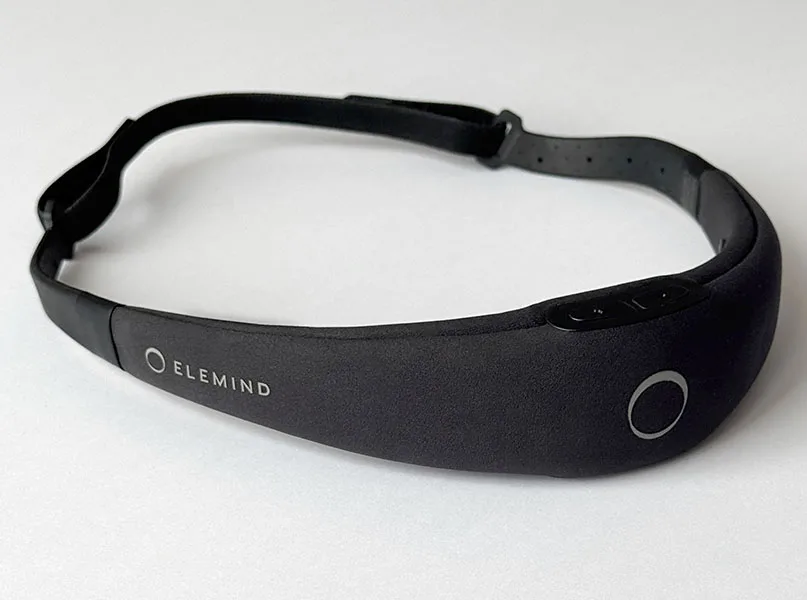
“We launched commercially in 2024 with a wearable electroencephalogram (EEG) headband designed to help people fall asleep and fall back to sleep significantly faster without drugs,” introduces Meredith Perry, co-Founder and CEO.
“Whereas every other wearable just reads, Elemind reads and writes. We don’t just track the brain – we change it directly,” she asserts.
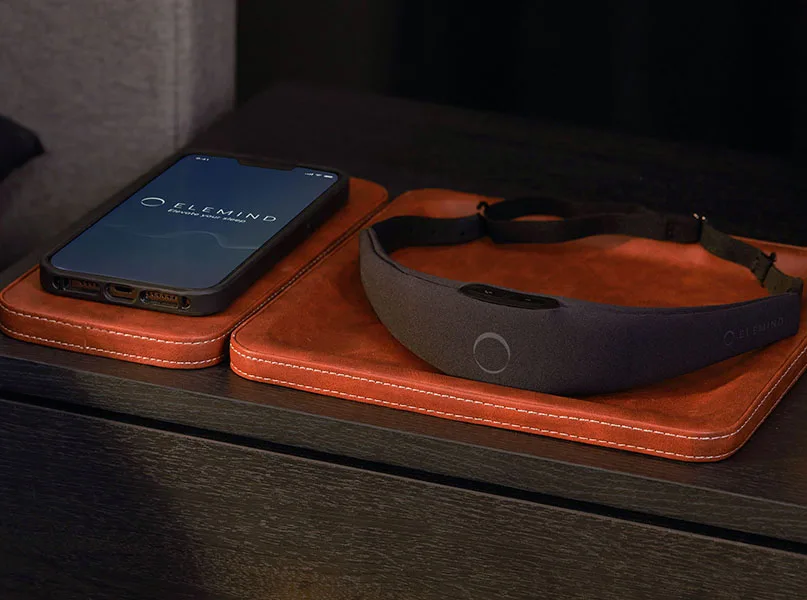
Elemind’s industry-changing product is built on direct, real-time interface with the brain. Using high-fidelity EEG, the company continuously reads neural activity and applies precisely timed acoustic stimulation individualized to each person’s brain dynamics.
The system models a user’s neural state moment by moment and intervenes at exactly the right phase of ongoing brain activity. This closed-loop approach, grounded in peer-reviewed clinical research and protected by patents, allows Elemind to influence sleep at the level where it naturally occurs – the brain itself.
The company views this as a new class of non-invasive medicine, one that uses sound, timing, and neuromodulation to produce measurable physiological effects.
“Elemind is building infrastructure, not a gadget,” emphasizes Perry.
“We are laying the foundation for how humans will interact with their own brains safely, non-invasively, and intelligently. Sleep is where that journey begins, but it’s not where it ends.”

“Whereas every other wearable just reads, Elemind reads and writes. We don’t just track the brain – we change it directly”
Meredith Perry, co-Founder and CEO, Elemind
THE FUTURE OF SLEEP
Elemind has pioneered a practical, wearable implementation of closed-loop neuromodulation, combining high-fidelity EEG, low-latency signal processing, AI, and precisely phase-locked acoustic stimulation in a consumer-ready device.
“Critically, our stimulation is not static. It is timed to the user’s own brainwaves, down to the millisecond,” Perry details.
This real-time phase targeting allows Elemind to influence sleep onset and other neural transitions effectively and is supported by multiple peer-reviewed studies. No other consumer-available system operates at this level of temporal and physiological precision.
The company is demonstrating that sleep can be treated as a modifiable neural process rather than something one merely observes or sedates.
“By gently intervening at the right time, we can help people fall asleep faster, improve sleep continuity, and potentially enhance deeper stages of sleep without pharmaceuticals,” expands Perry.
Beyond sleep quality, the implications include better next-day performance, improved recovery, and reduced reliance on sleep medications. More broadly, Elemind is helping shift health and wellness toward targeted, non-invasive, and adaptive interventions.
BEYOND SLEEP
Elemind’s vision of ‘beyond sleep’ exemplifies its ambition to unlock the brain’s potential, pushing the boundaries of what’s possible in neurotechnology and sleep science.
“Sleep is our entry point, not our endpoint. We chose sleep because it gives us long, high-quality neural data every night and a clinically meaningful problem where real-time modulation matters,” Perry informs.
Beyond sleep, the vision is a platform for the brain. Clinical trials using Elemind’s technology show efficacy in improving memory consolidation, recovery, neurological disorders such as tremors, and other brain state-dependent conditions.
Long-term, Elemind is building an adaptive neural system that learns from each interaction with the brain and improves over time.
To achieve this, the company is working on a variety of projects to expand its capabilities. One such initiative is the Deep Sleep Stimulation, which builds on Elemind’s work on sleep onset and targets slow-wave activity during rest. Its goal is to enhance sleep depth and the brain’s natural restorative and memory-related processes.
“This work is also being extended into clinical research. We recently received a USD$6.3 million grant from the Medical Research Council (MRC) to study how enhancing deep sleep may support memory consolidation in people with dementia,” details Perry.
“It’s an important step in understanding how targeted, non-invasive brain modulation during sleep could have meaningful neurological benefits beyond sleep quality alone.”
“Sleep is our entry point, not our endpoint. We chose sleep because it gives us long, high-quality neural data every night and a clinically meaningful problem where real-time modulation matters”
Meredith Perry, co-Founder and CEO, Elemind
WHERE THE JOURNEY BEGINS
Elemind is proudly built by a small, deeply technical team that spans neuroscience, electrical engineering, machine learning (ML), and applied clinical research. The team includes industry engineers and world-class academic collaborators, and has multiple peer-reviewed clinical trials published in top scientific journals.
Its scientific co-Founders include Dr. Ed Boyden from the Massachusetts Institute of Technology (MIT), a pioneer in neurotechnology, and Dr. Nir Grossman from Imperial College London, whose work has helped define modern non-invasive brain stimulation.
Co-Founder and CTO, Dr. David Wang, also holds a PhD in AI from MIT and leads the development of the company’s real-time neural modeling and closed-loop systems.
“I come from a background in astrobiology and wireless power, which has helped shape how we think about building precise, scalable technology for complex biological systems,” explains Perry.

Elemind also works closely with Dr. Heather Read, a professor at the University of Connecticut, whose expertise in sleep and neurophysiology informs the company’s clinical direction.
Supporting the science behind Elemind is a lean, highly effective team of engineers, operations leaders, and marketers who focus on translating rigorous research into products people can actually use.
“Together, our team is pushing the boundaries of what non-invasive neurotechnology can do, while staying grounded in real-world impact,” prides Perry.
As Elemind continues to look ahead towards a successful future of promoting deep, regenerative sleep, its priorities comprise expanding clinical validation, launching new sleep-stage specific features, and scaling access to the technology responsibly.
“We are also deepening partnerships across healthcare, wellness, and performance, while investing heavily in our core neuromodulation platform,” she concludes.
This article was produced by the editorial team at Healthcare Outlook and published as part of the Outlook Publishing global network of B2B industry magazines.
Outlook Publishing delivers industry insights, company stories, and sector coverage across healthcare, manufacturing, supply chains, construction, mining, food production, and sustainability.
Healthcare Outlook provides ongoing coverage of organisations and developments shaping the global healthcare industry.