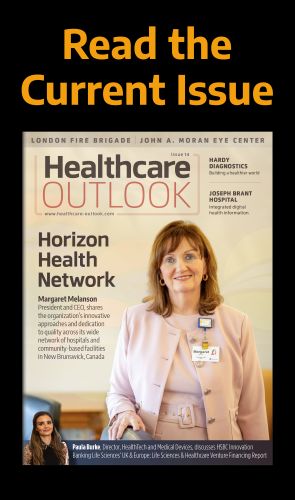





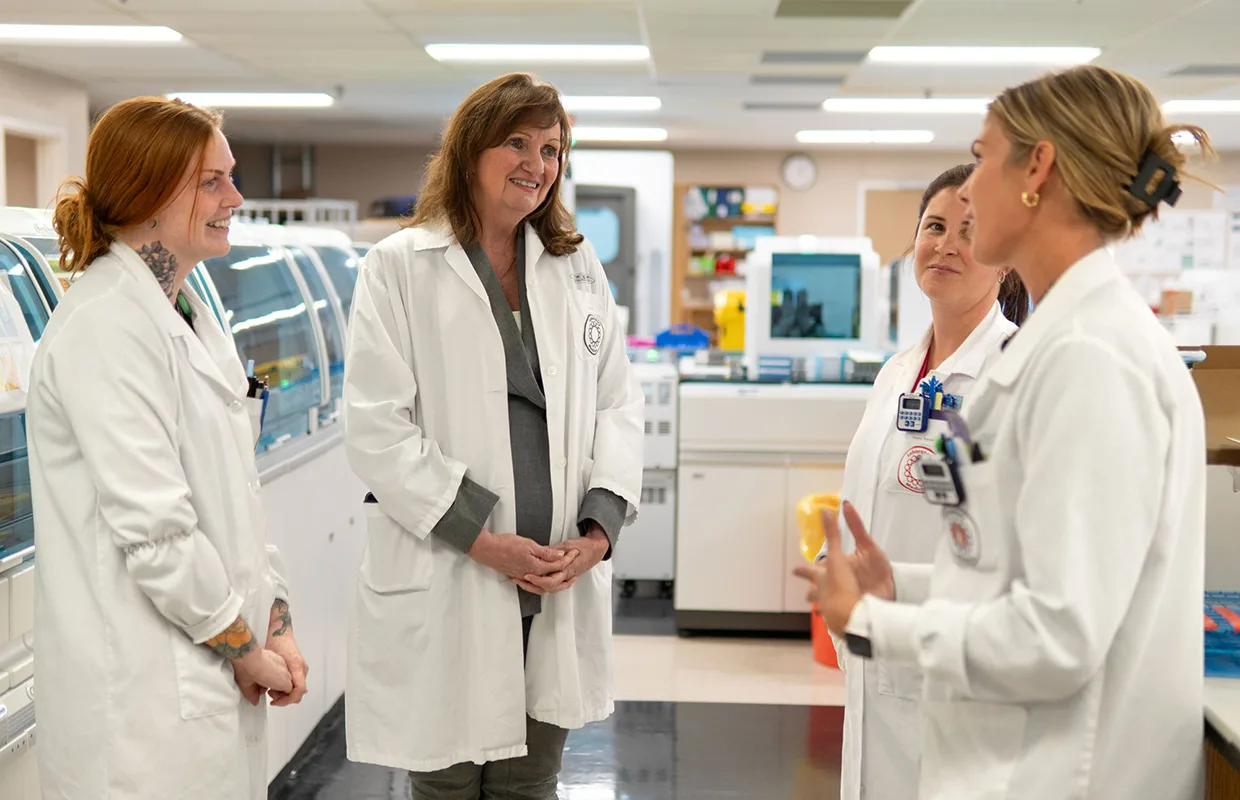
Horizon Health Network stands out as a leader in Canadian healthcare. President and CEO Margaret Melanson shares the organization’s innovative approaches and dedication to quality across its wide network of hospitals and community-based facilities in New Brunswick.
PATHWAYS TO PATIENT-CENTERED PROGRESS
New Brunswick, often referred to as the ‘Picture Province’ due to its stunning coastline and aesthetically pleasing landscapes, stands out not only for its natural beauty but also for its unique status as Canada’s only officially bilingual province.
With a population of approximately 868,000, Horizon Health Network (Horizon), one of the province’s two regional health authorities, manages two-thirds of New Brunswick’s healthcare services.
With a collaborative team approach to offering services in English and French, Horizon delivers sustainable, safe, and quality healthcare services to residents of New Brunswick, as well as nearby provinces such as Prince Edward Island and the northern part of Nova Scotia.
“As the second-largest regional health authority in Atlantic Canada, Horizon employs over 15,000 staff and around 1,500 physicians, providing diverse services to about half a million people,” opens Margaret Melanson, President and CEO.
“We also offer tertiary care services, including cardiac surgery for the entire province.”
Horizon operates 12 hospitals, including the province’s two largest, along with 95 small health centers, public health offices, and mental health and addiction facilities spread across larger cities and small communities.
“We provide a full range of care, including primary and community health services, mental health and addiction support, and public health for mothers, newborns, and the general public regarding infectious diseases,” Melanson explains.
“Our hospitals offer both acute and specialized services, such as cancer care, emergency services, and chronic disease management, with larger facilities handling more specialized cases.”

A COMMITMENT TO QUALITY
Horizon ensures the highest quality, patient-centered care tailored to the diverse health needs of its residents, which Melanson is extremely dedicated to.
“In 2014, during my time as Vice President, I launched an initiative to promote patient-centered care throughout our organization. This approach is now integrated into everything we do.
“We established the Horizon Patient and Family Advisory Council that participates with many of our project teams, which helps us design our care around patients’ values, preferences, and individual circumstances.”
The organization has adopted various technologies to improve patient care, quality, and team education.
“Our complex quality and safety strategy establishes teams within clinical and non-clinical service areas that report to vice presidents, highlighting the significance of quality and safety.
“I chair Horizon’s Quality and Safety Committee, overseeing all initiatives and addressing incidents,” Melanson expands.
Medication safety is essential across all services, and Horizon prioritizes transparency and accountability in every interaction. Its commitment to SeamlessMD – a digital patient engagement platform that gives patients access to a variety of helpful resources from their mobile device, improving their treatment experience.
“Patients scheduled for cardiac surgery receive tailored information on their mobile devices in the days leading up to the procedure through the SeamlessMD platform. This includes guidance on stopping anticoagulants and what to expect on surgery day,” she outlines.
“They can also share this information with family and reach out with questions, reducing the need for unnecessary calls or emergency visits. This is an example of the patient-centered technology we are eager to leverage and implement widely. It is very reassuring for patients to know exactly what will happen in advance and what to expect postoperatively.”

REVOLUTIONIZING THROUGH INNOVATION
By transitioning to a digital care model, Horizon is enhancing care and improving the overall patient experience.
“We are currently implementing six artificial intelligence (AI) initiatives this fiscal year, including accelerating stroke diagnosis through automated medical imaging and reducing administrative burdens on our physicians by providing hundreds of licenses for an AI scribe program,” Melanson discloses.
During a physician visit, the patient discusses their symptoms while the doctor inquires about the duration of those symptoms, prior treatments, medications, and tests.
A computer system listens to this exchange, capturing key information such as demographics, symptoms, and potential diagnoses.
Much of this information is pre-documented, allowing the doctor to quickly review and edit clinical notes, thereby enhancing efficiency and enabling more face-to-face time with the patient.
Additionally, AI technologies are being used for early cancer detection through passive screening of routine scans.
“We’ve introduced passive screening for lung cancer; anyone who’s getting a chest X-ray will automatically undergo a scan for precancerous cells or other concerns – allowing for early detection of potential issues,” Melanson optimistically tells us.
“With a strategic approach, we aim to ensure our investments have the desired impact. We are collaborating closely with technology partners such as Google and Microsoft, as well as other major organizations, to explore potential innovations and incorporate their recommendations.”

TRANSFORMING CANCER CARE
Horizon is placing a strong emphasis on research and its expected impact on innovation, particularly in areas such as injectable chemotherapy.
“In November, we launched our new institute dedicated to research, innovation, and better health,” Melanson sets out.
“This initiative highlights our commitment to accelerating research that directly improves health outcomes and helps us provide advanced medical knowledge and treatment options for New Brunswick residents.”
The institute has already established major partnerships that will directly benefit patients, including a strategic partnership with the University of New Brunswick.
Furthermore, a partnership with biopharmaceutical company AbbVie is showing great promise by collaborating on treating inflammatory bowel disease, ovarian cancer and post-stroke spasticity.
“The institute is focused on improving patient care. For instance, healthcare company Roche Canada has introduced a new injectable medication for a specific type of lung cancer, replacing the previous chemotherapy infusions that required lengthy visits to treatment centers,” she specifies.
“To expedite access to this, we partnered with the New Brunswick Extra-Mural Program through which nurses visit patients’ homes to administer medication, ensuring they receive advanced care while minimizing travel.”
This approach alleviates the challenges of attending chemotherapy treatments, such as arranging childcare and managing work commitments.
“We are utilizing the institute for more than academic purposes. While affiliated with our universities and involved in numerous applied research studies, our main goal is to turn innovation into practical improvements in patient care.
“We are examining the evidence to determine how we can leverage our findings and advance our initiatives and other ongoing projects,” Melanson says.
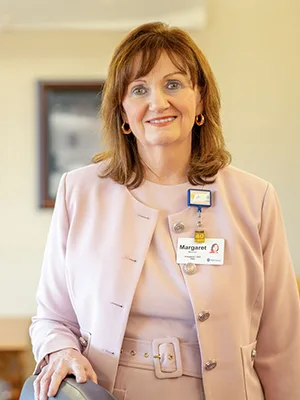
“Our partnership with YouTube is a great example of bringing evidence-based health content directly to our patients, helping us to become a trusted resource”
Margaret Melanson, President and CEO, Horizon Health Network
EMPOWERING EDUCATION
To enhance healthcare education, Horizon is using social media channels as a means of engaging the public.
“Our partnership with YouTube is a great example of bringing evidence-based health content directly to our patients, helping us to become a trusted resource. It provides a credible and reliable source for healthcare-related education in a world where there’s both a lot of good and bad out there on the internet,” Melanson establishes.
“We started with general health topics, then expanded to mental health, teen mental health, and first aid content, creating over 246 videos and totaling around 11 million views – our channel has nearly 11,000 subscribers!”
This is the modern approach for Horizon to reach people outside traditional healthcare settings, ensuring education and support occur before people get sick.
“This initiative promotes well-being by offering education and tools for better health. The way we deliver information is rapidly evolving; newspapers are no longer the main source, while platforms like YouTube are gaining trust.
“We’re excited about how this partnership went and are open to exploring similar opportunities as we move forward, given the success and positive response from patients and their families.”

BETTER PATIENT OUTCOMES
One of Horizon’s major projects is expanding collaborative care clinics – also known as family health teams – in its communities.
“In addition to our existing primary care locations, we have introduced seven new clinics and are planning to add more within the next 12 to 15 months. Having timely access to primary care is exceptionally important for our citizens, making this an extremely significant and high-priority project,” impassions Melanson.
“It’s exciting to create new spaces and teams that leverage our physician resources and nurse practitioners. By surrounding people with allied health teams, physiotherapists, dieticians, and social workers, we can provide care close to home.”
A significant transformation project underway for Horizon is to ensure that when individuals move to a community, their children can attend a local school, and the community health clinic is available to the entire family.
“We’re also working at relocating services currently in a hospital that would work better at another location. Traditionally, blood collection services and ambulatory clinics have been located in hospitals due to space constraints,” Melanson notes.
“Focusing on provider needs can be convenient for clinicians; however, patients benefit more from community-based care. Hospitals often represent illness, but we aim to promote wellness. We’re looking at leasing space for various services off-site to improve accessibility and parking.”
Horizon is transforming surgical care by significantly reducing wait times. Since 2023, the organization has reduced them by approximately 35 percent which means that today, almost 92 percent of patients receive surgery within one year or sooner.
“Urgent surgeries are now more efficient, often performed on an ambulatory basis or requiring only an overnight stay. Many hip and knee replacement patients go home the next day, showcasing advancements in patient care technology,” Melanson states.
“It’s exciting to create new spaces and teams that leverage our physician resources and nurse practitioners. By surrounding people with allied health teams, physiotherapists, dieticians, and social workers, we can provide care close to home”
Margaret Melanson, President and CEO, Horizon Health Network


PRESCRIBING A NEW COURSE
Horizon recently launched its new five-year strategic plan in the spring of 2025, centered on four main pillars.
Firstly, advancing community care by ensuring that mental health services are more readily available in communities. This includes building on existing recruitment efforts, maintaining momentum, and continuing to capitalize on staff retention initiatives.
Additionally, Horizon has introduced a new culture commitment through the Our Promise initiative, which aims to foster a safe workplace that recognizes the value of its people and offers educational opportunities.
“We have several initiatives aimed at achieving excellence in hospital care, involving ongoing transformation, introducing new technologies, and a robust research and innovation portfolio.
“We are very focused on our initiatives across all four priority areas, and we’re moving quickly into the future.”
New Brunswick has a significant senior population and is facing patient flow challenges.
“The dedication of our staff and the work of our leaders is evident in the high retention rates we continue to achieve.
“While we have numerous patient flow challenges, people are happy and keen to collaborate. That’s a testament to what we have achieved as leaders within our organization,” Melanson concludes earnestly.