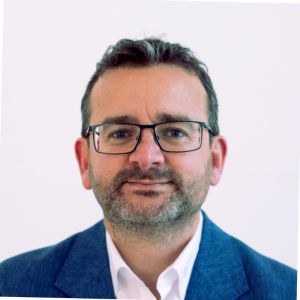




Kim Barnes, President of Phacilitate, is deeply passionate about connecting the global cell and gene therapy (CGT) community to drive progress across the field. She speaks to us following Advanced Therapies Week, one of the most established and influential CGT conferences in the US, and outlines how the event will play a critical role in shaping the next decade of advanced therapies.
Q&A WITH KIM BARNES, PRESIDENT, PHACILITATE
Firstly, could you introduce us to Phacilitate’s Advanced Therapies Week?
Kim Barnes, President (KB): Advanced Therapies Week (ATW) is Phacilitate’s flagship global gathering for the advanced therapies community.
Each year, it brings together senior leaders from across BioTech, pharma, investment, manufacturing, and solution providers to have forward-looking conversations about where the field is heading and how the industry moves forward together.
The show is deliberately focused across the whole value chain of advanced therapies, from preclinical through to on-market therapies and everything in between. That means looking at investment, clinical development, manufacturing, supply chain, reimbursement, and patient access.
But ATW is not just about content – it’s also about people. It’s where the community comes together, relationships are built, and collaborations begin, all with the shared goal of accelerating innovation and improving patient lives.
What makes ATW one of the most established and influential cell and gene therapy conferences in the US?
KB: ATW has been part of the advanced therapies story for over two decades, and the event has grown alongside the industry itself, evolving in step with the expansion of CGT into mainstream healthcare innovation.
In the early years, we were 200-300 people in the basement of a Washington, D.C. hotel, and that was the size of the industry.
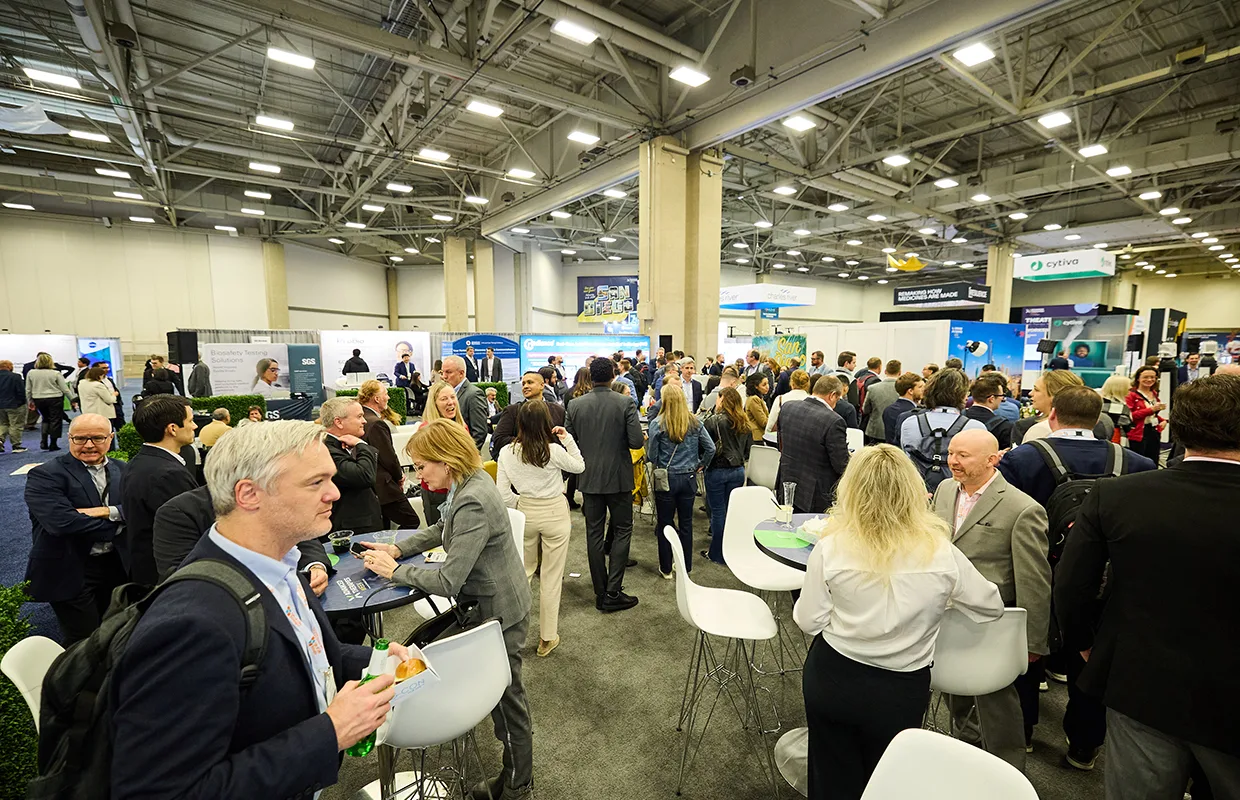
This year, we welcomed over 2,000 attendees and more than 600 CGT developers – including people who were with us in that hotel 22 years ago. That’s been part of our DNA at Phacilitate.
That continuity has helped us build long-standing relationships and a trusted platform where meaningful conversations happen. Over time, we’ve seen many of those conversations turn into collaborations that shape how the sector evolves.
“ATW has been part of the advanced therapies story for over two decades, and the event has grown alongside the industry itself, evolving in step with the expansion of CGT into mainstream healthcare innovation”
Kim Barnes, President, Phacilitate
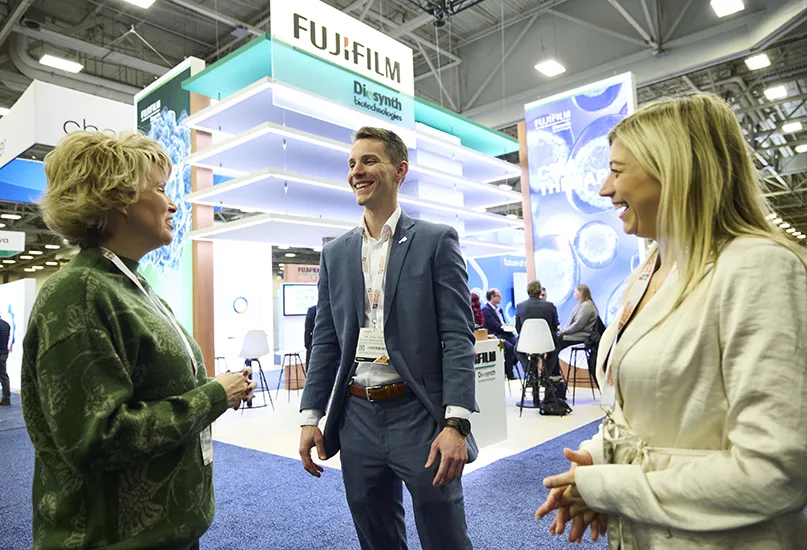
How does ATW bring the global CGT community together to make progress possible?
KB: Bringing the global CGT community together is central to everything we do at Phacilitate. We have partnerships across the world in North America, Europe, Asia Pacific, and emerging regions, and this network allows us to connect different ecosystems into one shared conversation.
Alongside structured one-to-one meetings, we also create more relaxed, informal networking environments where relationships can develop naturally.
Our goal is to connect the advanced therapies industry to help them save patient lives, so it’s all about creating the environments where that can happen.
When people feel comfortable and open, that’s where the most meaningful connections and ideas tend to follow.
Can you tell us about the event’s recent move to San Diego?
KB: The move to San Diego marks an important milestone for ATW and reflects how the event continues to evolve with the industry.
Until recently, we’ve always been on the East Coast – firstly in Baltimore and Washington, D.C. and then following the sunshine south to Miami, where a strong investment community was emerging in the region.
One of the reasons for our relocation was to open up to new audiences. San Diego is easier to get to from Asia, where a lot of innovation in stem cells and CAR-T therapy is happening.
We also wanted to anchor the event in a really strong BioTech hub, and San Diego offers exactly that, with its university and the wider California and West Coast life sciences ecosystem creating a powerful centre of innovation.
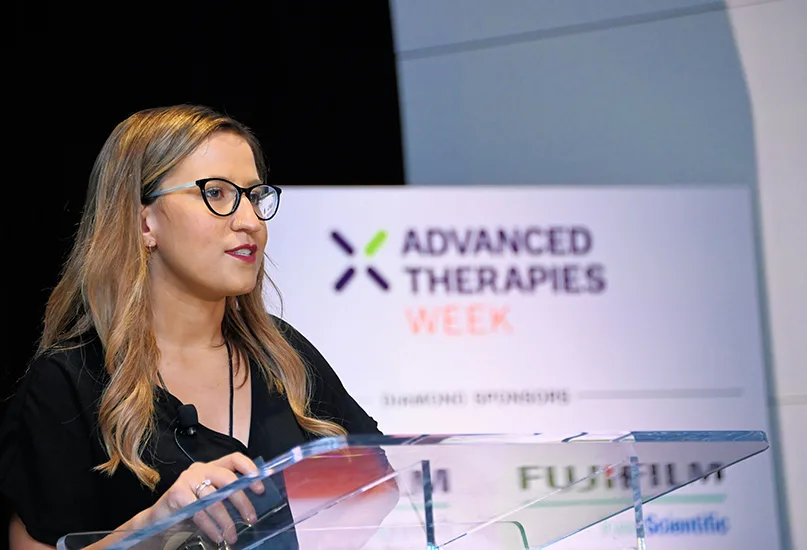
How will ATW play a critical role in helping to shape the next decade of advanced therapies?
KB: ATW is deliberately future-focused, with discussions framed around long-term impact rather than short-term trends.
We have lots of interactive discussions talking about what’s shaping the advanced therapies industry at the moment and how that’s going to continue shaping it for the next 10 years.
For example, the investment summit on the first day brought together the most forward-thinking investors, BioTech leaders, and strategic partners to dissect what defines a “fundable” company in 2026, explore the landscape of alternative financing models, and consider what’s next for BioTech investment.
But it’s not just about the programme – on the other side, you’ve got the community aspect. The connections made at the show are forging partnerships that will dictate how the next 10 years shape out for the advanced therapies industry.
What emerging technologies were showcased in the Innovation Zone at ATW 2026?
KB: The Innovation Zone really brings together a mix of new technologies that show where advanced therapies are heading, with a big focus on how the industry is evolving in very practical ways – how therapies are made, scaled, and ultimately reach patients.
There’s a lot of innovation happening around manufacturing and infrastructure. Companies like Bausch+Ströbel are working on modular, automated production environments designed specifically for the complexity of CGTs.
It’s about building manufacturing models that are flexible, scalable, and fit for the realities of advanced therapies, rather than trying to adapt traditional pharma systems to something completely different.
There’s also a strong focus on platform technologies that support therapies across their full journey. ProBio is a good example of this shift toward more integrated development and manufacturing models, where therapies can move more smoothly from early development through to clinical and commercial stages.
That kind of joined-up infrastructure is becoming increasingly important as therapies move faster and pipelines become more complex.
More broadly, the Innovation Zone reflects a wider wave of new technologies across areas like vector development, automated cell processing, and biomanufacturing systems – all focused on making advanced therapies more efficient, reliable, and accessible.
It’s really about giving the community a glimpse of what’s next and the technologies that will help shape the future of the field.
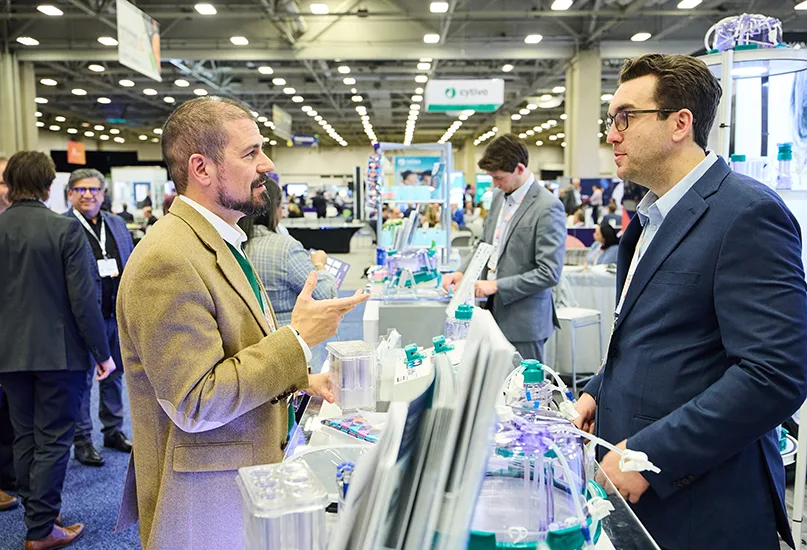
What other CGT innovations do healthcare executives and investors need to know about in 2026?
KB: Several key innovation themes are continuing to gain momentum across the sector, particularly as advanced therapies move from highly specialised applications toward broader clinical use.
One of the most significant shifts is around delivery models and how therapies reach patients. In vivo versus ex vivo has been a huge debate for a long time.
At the same time, manufacturing innovation is becoming increasingly critical as therapies move into larger patient populations. Scalability, efficiency, and cost reduction are no longer future ambitions – they are operational necessities.
This includes growing attention on allogeneic or off-the-shelf therapies, alongside advances in scalable manufacturing and process automation. Digital transformation is also playing a defining role.
And, of course, artificial intelligence (AI), which is being integrated into manufacturing and clinical processes. That’s definitely a trend to keep an eye on.
Together, these developments are helping move advanced therapies closer to broader, more sustainable adoption across healthcare systems.
Where is CGT investment flowing in 2026, and what does this mean for healthcare?
KB: Investment in advanced therapies is becoming more concentrated and selective, with clear divergence emerging across the market.
Investors are investing later, with more capital flowing to Series B and up. That suggests investors want to see you in Phase 2, in late-stage clinical development, rather than putting money in at preclinical Series A. It’s all about confidence-building with investors.
At the same time, the investor landscape itself is changing, with private equity playing a more prominent role alongside traditional venture capital.
While this creates pressure for early-stage companies, it also signals the growing maturity of advanced therapies as a serious, long-term area of healthcare investment.
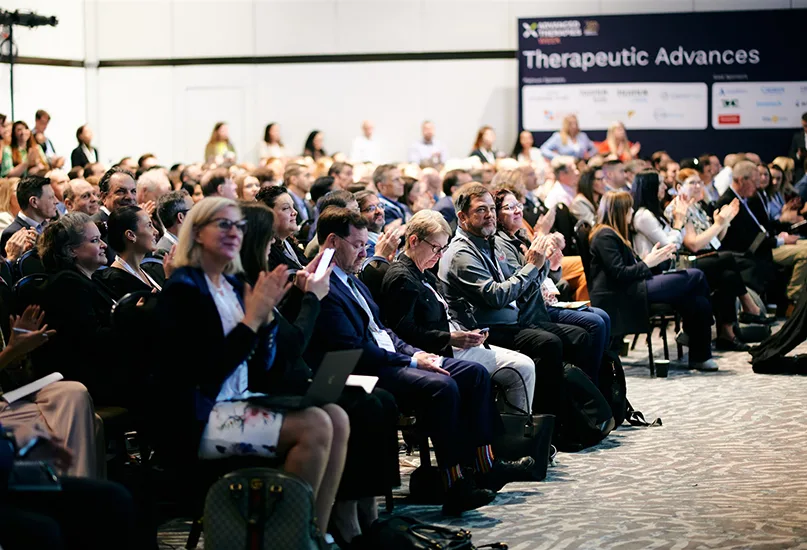
What bottlenecks are currently holding CGT back, and where are solutions starting to emerge?
KB: Manufacturing and supply chain complexity remain some of the most significant barriers to scaling advanced therapies.
There are constant conversations about how to get therapies delivered globally at scale – from where manufacturing facilities should be based to whether production should happen at the bedside for autologous therapies. These are very real, practical challenges the industry continues to work through as the field grows.
Beyond infrastructure and logistics, funding dynamics also continue to shape what reaches patients. Investment can also be a bottleneck because without money, people can’t create therapies.
If we’re not getting investment in Series A and we’re seeing a trend of later-stage investment, newer companies might struggle to bring therapies through the pipeline.
At the same time, progress is being made. Advances in automation, smarter manufacturing technologies, and stronger end-to-end capabilities across the value chain are starting to ease some of these pressures.
The challenge now is aligning innovation, infrastructure, and investment so scientific progress can translate into real-world patient access.
“ATW 2026 represents a clear step change in the evolution of the event, particularly following the transition to San Diego”
Kim Barnes, President, Phacilitate
Finally, how did ATW 2026 compare to the previous edition in 2025, and are you excited about the future of the event?
KB: ATW 2026 represents a clear step change in the evolution of the event, particularly following the transition to San Diego.
We had more therapy developers registered than ever and more companies coming into the Innovation Zone to launch new technology at the show, with new people bringing different types of discussion and perspectives.
There’s a real sense of momentum around the future direction of Phacilitate and our global strategy. We’re launching the inaugural Advanced Therapies World in Saudi Arabia this November, creating a new platform to connect international expertise with the fast-growing Middle East and North Africa (MENA) life sciences ecosystem.
At the same time, we’ll keep building our relationships with therapy developers and strengthening our foothold in San Diego and across the West Coast.
Looking ahead, the focus remains firmly on global collaboration and long-term impact. Ultimately, it’s about coming together to support the global patient market for CGT.